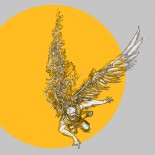
Wake up Call
 Someone had it in for Macintyre. He had been thrust into a battlefield by forces he could not comprehend, possibly Martians. Worse still, his fellow soldiers were preventing him from sleeping: the explosion in the palace that lit his head on fire was just the latest wake-up call. The war was between the emperor’s nationalist forces and General Navas’ communist rebels. Macintyre didn’t care who won the war, mainly because all he cared about was sleep. Also he reasoned dimly that the fighting was all about who governed the insignificant island of Chapon, where a bunch of Latinos thought they were Japanese.
His fellow rebel soldiers were incompetent. Luckily for Alpha Company, the Chaponese Nationalist soldiers on the other side were just as incompetent. Steinberg had decided on the name Alpha Company. The other two companies were called Rogue Company and Marx Company. Continuity didn’t matter very much for the rebels.
On the day Alpha Company captured Quiotó, and Nationalists subsequently surrounded the city, Macintyre was losing his mind. He hadn’t slept in days. He threw a billiard ball at the Nationalist colonel who was yelling for Steinberg to surrender.
“I’m trying to sleep up here!” he yelled. Rifle fire immediately shattered the window to the billiards room and a piece of glass lodged itself in Macintyre’s cheek. After pulling the shard out, and seeing the subsequent blood flow, he passed out on the pool table and slept for the first time since the beginning of the war.
General Navas had decided to start the war that day because his older brother Alvaro died. He had waited 60 years to declare war. The Navas brothers came to the south Pacific island of Chapon to start a revolution flush from communist victory in Cuba. Their boat hit a Martian mine and the brothers barely made it to shore alive.
After Che Guevara knocked over his cup of coffee, the communists in Cuba lost the only map they had to find Chapon in the Pacific. The coffee spill was the result of a miniature earthquake the Martians had induced in Havana. Guevara reasoned that the brothers would come back once they realized supplies weren’t on their way. Instead, the brothers had spent 60 years converting locals and stealing enough rudimentary firepower to declare war.
Macintyre had been a prisoner in the rebel camp on the day Navas declared war. He was taking a nap, when Steinberg shook him awake and told him the rebels were going to kill him. They didn’t have enough men to leave guards behind.
“You wake me up to tell me I’m going to die? ”
“Look, just prove to them you’re on their side.”
“I’m not on their side. The Cold War ended. They’re deluded assholes.”
“All you have to do is spit on the kid, and they’ll be sold.”
“What’s wrong with you? Don’t you people ever sleep?”
The kid was Tato Dominguez, son of Chapon’s autocratic emperor Matsumoto Dominguez. Macintyre had been hired – obligated, really – to teach the boy about American culture. On the first day of lessons, he went out drinking on the beach with his friend Ustinov and told the kid to shut up. The kid was an insufferable brat.
Alpha Company had been alerted that night via Martian radio contact that the emperor’s son was on the Osáqua beach defenseless. Macintyre and Ustinov woke up the next morning with muskets pointed at their faces. Rebels asked them what the hell they were doing with the devil’s son. Macintyre told them to take the kid and let them go. They were just tourists, Americans. The rebels relaxed a little: Steinberg, their commander of Alpha Company, was also American.
Steinberg had joined the Navas Revolution after he graduated from college without any ideas but with the certainty that the world was unjust. He bought a car in his hometown of Munster, Vermont and drove through Central and South America down to Chile. He met several poor people and decided he was a communist. In Santiago, a Martian hidden behind a mustache told him that he would find what he was looking for on the island of Chapon.
“What am I looking for?”
“You’ll see for yourself.”
On the island, Steinberg discovered the longest lasting communist guerilla organization on the planet. He joined up immediately. The Navas Brothers were impressed by his idealism. The young American had been on the trap and skeet team in college. He became the only soldier in the Revolution who could shoot straight. Alpha Company soon developed as the most successful division in the rebel army. Steinberg had managed to capture a grand total of 5 prisoners of war, including Macintyre, Ustinov, and Tato.
In his cell in the rebel camp, Macintyre decided he would bite the bullet and spit on a ten-year old boy. In the end, he rather enjoyed it. The kid looked pretty pitiful in his prison cell wiping spittle off his face. Macintyre would have felt guilty, but he was too concerned about his own tiredness.
“Can I go back to sleep now?” he asked Steinberg.
“You need to get your uniform on and go through Basic Training first.”
“You’re kidding.”
“No. Ustinov’s already started.”
Macintyre reported to Basic Training to perform his second compulsory labor on the island. The first enforced job was thrust upon him by Emperor Matsumoto. Macintyre had been assigned to teach Tato about America.
Emperor Matsumoto Dominguez was the grandson of Francisco Dominguez, the original emperor of Chapon. Francisco had declared himself emperor after the Japanese had abandoned the south Pacific island to occupy more strategic areas leading up to WWII. Martians had diverted any government vessel from the island ever since.
No nation came to claim Chapon after the war. From the capital city of Toquió – all the cities in Chapon bore Spanish versions of Japanese names – the Dominguez emperors ruled with an iron fist, claiming their authority came from Japan itself. The Chaponese were convinced the Axis had won the war. America, however, was still seen as a worthy enemy. Matsumoto Dominguez wanted his son to see how the American psyche differed from that of the Japanese.
“My son Tato will one day take my place on the throne. He should know your country’s weaknesses as well as its strengths. He should learn how your people managed to fight but inevitably lose honorably to the Japanese empire.”
“I might not be the best teacher in that subject,” Macintyre had argued.
He wasn’t the best soldier either. He slept through the first day of the siege of Quiotó with a gaping hole in his cheek. Ustinov woke him up by pouring rubbing alcohol on the wound.
“I don’t think we can hold out much longer,” Ustinov said despairingly as he looked out the broken window. “We just can’t match their firepower.” The rebels were using muskets from the beginning of the twentieth century. The nationalists had rifles from the First World War.
“I’m tired” Macintyre said.
“Steinberg gave us a mission.”
“Here we go.”
“We’re going to pretend to be prisoners of war.”
“We are prisoners of war,” Macintyre said.
Ustinov ignored him. “We’ll get escorted back to Toquió and from there disable their defense systems.”
Ustinov was a doctor. He’d been sent to Chapon after the address on his outreach trip had been smudged. He was supposed to go to Chapawi in Samoa. Martians had smudged the address. Lonely and struggling to comprehend what was happening on the island, Ustinov wrote to his college buddy Macintyre begging him to come visit.
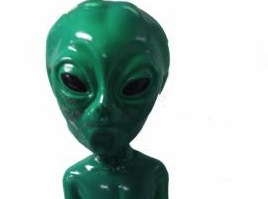
Macintyre needed any excuse to leave Baltimore. A construction project had been going on outside his apartment window for the past 18 months. He had not had a good night’s sleep in over a year. Morning after morning, drilling had been his wake-up call. Martians had funded the construction project by selling novelty items to Earthlings. Martians specialized in making green-headed bobble-heads.
Back in Toquió after the siege of Quiotó, Emperor Matsumoto greeted Macintyre and Dominguez with open arms.
“You Americans are really quite resourceful. It must have been awful living conditions in the rebel prisons. I hope my son is as brave as you are.”
The two Americans nodded awkwardly. Ustinov had also been asked to spit on Tato as a sign of loyalty to the Rebels.
“Now I must ask for your help once more. I need to know as much as possible about the rebels. Knowing your enemy is the key to victory.” He paused. “I think.”
Macintyre said: “I was injured the whole time, knocked out.” He pointed at his bandaged cheek. “The doctor here can fill you in.” Ustinov continued to nod awkwardly. He pulled Macintyre aside. “While he’s occupied, try to find the central electrical generator. Knock it out.”
Macintyre had no intention of finding anything but a bed. He wandered down to the basement of the palace where he wouldn’t be bothered. In a dark room where the light switch only succeeded in giving off a warm orange glow, he found a pile of old mattresses.
That night, Ustinov, after giving his report to the Emperor, saw that Macintyre hadn’t done his job. He believed the rebels had the right idea. He’d been perplexed that a revolution or a human rights organization hadn’t stepped in to end the Dominguez’s reign before. He wasn’t a communist like his Russian parents, but he did believe in justice.
Ustinov made his way to a room labeled “control room,” entered, and turned off the central power for the city. That was the cue for the rebels outside to take the capital.
Steinberg burst through the city gates screaming “Viva la Revolucion.” It negated entirely the element of surprise, but the young American had a penchant for the dramatic. He’d snuck through the sewers to escape the siege of Quiotó so that he could lead this valiant attack. A few yards into the city, all semblance of surprise was further eroded as the East wing of the palace exploded.
The light switch that Macintyre had activated was in fact the on switch to the heating system in the palace basement. Martians had installed this system years before. No one had ever turned it on though: the emperors and their servants had sweated enough on the island for three generations without it. Heat spread under the garish villa-palace all the way to the arms cache in the East wing. Rags, used to clean the weapons, were hanging on the furnace inside: Matsumoto always insisted on perfectly shiny weapons. The rags combusted, gunpowder and dynamite followed suit and half the palace went up in flames.
Inside the palace throne room, Matsumoto was begging Ustinov to tell him what to do.
“I have no idea what’s going on. I can’t lead an army! All I know is that uniforms and weapons should be in tip top condition.”
“I’m a doctor, what the hell do I know?” Ustinov countered.
At that moment, Steinberg kicked down the throne room door, aimed his pistol and shot Matsumoto through the forehead.
Both Nationalist and rebel soldiers had been so shocked by the explosion that most forgot to fight each other. Steinberg was an exception. He had torn through the streets killing Nationalists left and right. He made it all the way to the throne room of the palace practically unimpeded.
On the outskirts of town, General Navas had a heart attack when the palace exploded. Both the rebels and Nationalist were now bereft of leadership. Steinberg stepped up to fill the void. The Martian with the moustache was right: he had found what he was looking for. Steinberg shook Ustinov’s hand. “Good job comrade,” he said. He stepped out onto the balcony of the throne room, raised his rifle and shouted authoritatively down to the square below:
“The war is over. The reign of the emperors in Chapon is finished. We can all celebrate liberation. From now on, this island will be governed…”
Steinberg was interrupted by a crack as the support for the balcony crumbled. He fell three stories to his death.
Just then, Macintyre ran into the throne room, covered in soot, the hair on the left side of his head singed. Ustinov and Macintyre looked at each other.
“What do we do now?” the doctor said.
Macintyre walked over to where the balcony had been and looked down at Steinberg’s body. “I think, maybe, we get ourselves a good night’s sleep.”
A great cheer erupted from the city below. “Viva el sueño! Viva los Americanos!”
Macintyre smiled sheepishly. Someone had been looking out for him all along. Somewhere out in space, a couple Martians bobbed their heads appreciatively.
By Max Wilson
 Icaresque